
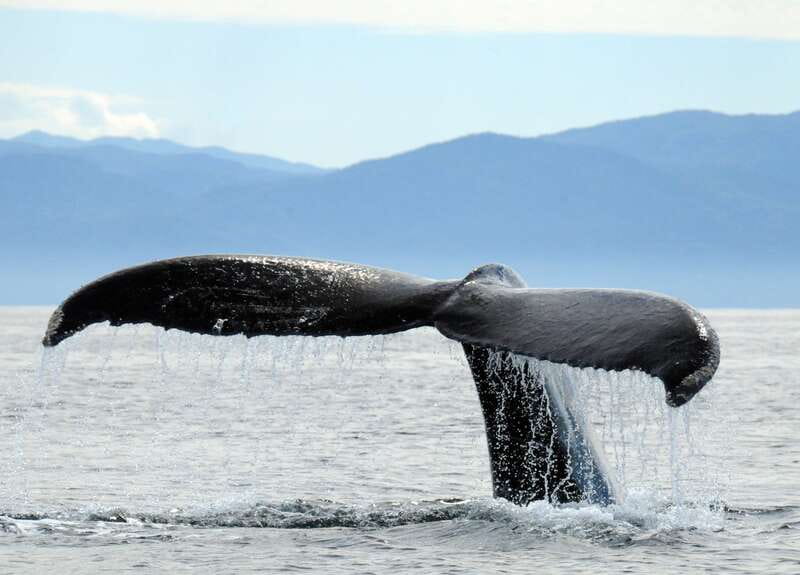
Reviewed · BANDERAS BAY WHALE & DOLPHIN WATCHING
Puerto Vallarta: Humpback Whale Research Adventure Tour
Whale songs over a warm Puerto Vallarta breeze. This humpback whale research outing pairs a short office briefing with time on the water in Bahía de Banderas, so you’re not just looking for blows—you’re learning what you’re seeing.
I especially like the biologist-led instruction before the boat. You get an educational session right at EcoTours Vallarta, and it sets the pace for the rest of the 3.5-hour experience. One consideration: this is not for folks who get seasick, and the tour also isn’t suitable for several mobility and health situations.
Key things that make this tour worth your time
- Expert briefing at EcoTours Vallarta before you ever head out on the water
- Hydrophone listening so you can hear humpback songs (not only spot the whales)
- About 3 hours in Bahía de Banderas with time to watch and track behavior
- Real participation in a research project, collecting observations for the team’s work
- Small authorized boat plus coffee/tea, water, and a light snack
In This Review
- Humpback Whale Research in Puerto Vallarta: the tone is educational, not just scenic
- Starting at EcoTours Vallarta: your pre-boat lesson (and why it pays off)
- The 3.5-hour small-boat format: how the day is paced on Bahía de Banderas
- Hydrophone time: hearing humpback songs through the boat’s equipment
- Participating in a research project: what you’re actually doing on the water
- What sightings can look like: moms, calves, and occasional big moments
- Price and value: is $134 a good deal for 3.5 hours?
- Who this Puerto Vallarta humpback tour is best for
- Getting ready: face covering, pets, and seasickness reality
- Should you book this humpback whale research adventure?
- FAQ
- How long is the Puerto Vallarta humpback whale research tour?
- Where do I meet for the tour?
- What languages is the tour offered in?
- What is included in the $134 price?
- Is there an extra boarding fee?
- What should I bring, and are there any restrictions?
Humpback Whale Research in Puerto Vallarta: the tone is educational, not just scenic
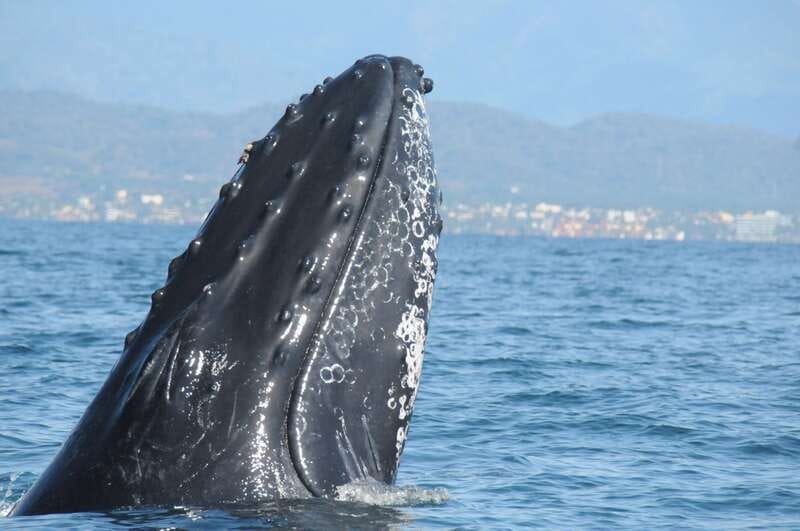
If your idea of a whale tour is simply spotting whales and snapping photos, this one will feel different. It starts with an explanation of humpbacks and what to notice, then transitions into observation time. That rhythm matters because humpbacks don’t always put on a constant show. When you know what behaviors to watch for, the quiet moments feel purposeful.
I like that the guide team frames the whole outing around behavior and communication. You learn about whale life and behavior on each tour, then you head out to look for whales while actively contributing to the research effort. It’s the difference between watching for movement and watching for meaning.
You’ll also see plenty of marine wildlife in the bay beyond whales. In past departures, people have also spotted dolphins, manta rays, and turtles, so the boat time can stay interesting even when a specific whale group is slow.
Starting at EcoTours Vallarta: your pre-boat lesson (and why it pays off)
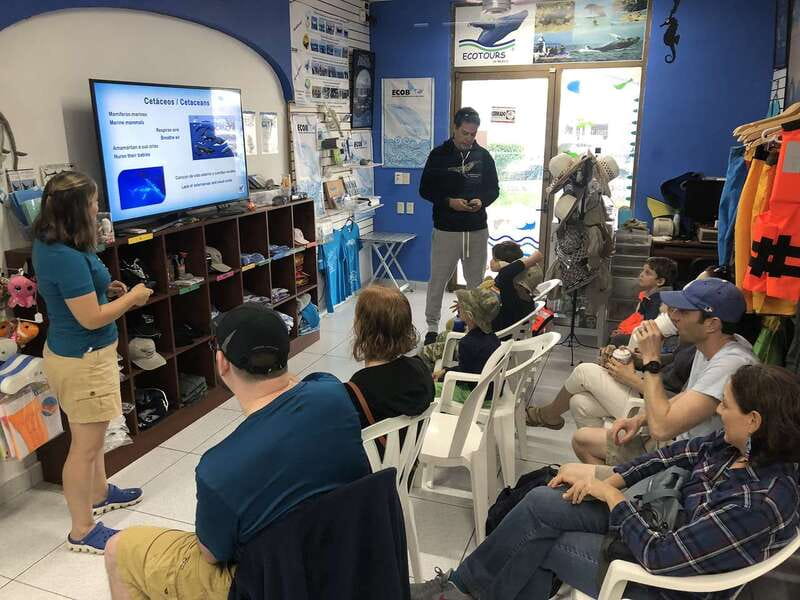
The meeting point is the EcoTours Vallarta office at the end of Proa street, next to the ramp, with a terraza. Plan for a smooth start here, because the tour begins with a guided educational session before boarding.
That office session is more than a lecture to fill time. It’s designed to give you the basics of what humpbacks do and why. Once you understand the basics—how humpbacks move, interact, and communicate—you’re better able to interpret what you spot once the boat is underway.
You’ll also get guided help in English or Spanish, depending on the tour language. The guides named in past outings include Michael, Martin, Maggie, Cynthia, and captains such as Gabriel, so you can expect a strong focus on real-world whale know-how.
The humpbacks winter here, more ways to meet them
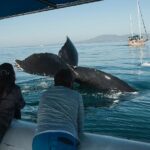
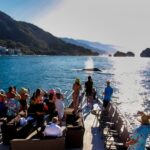
The 3.5-hour small-boat format: how the day is paced on Bahía de Banderas
After the briefing, you board a small authorized boat for the main time on the water. The schedule is built around about 3 hours in Bahía de Banderas, with the tour finishing back at the EcoTours Vallarta office.
This pacing is a big part of the value. Instead of rushing from one quick stop to another, you get time to search, watch, and return to what’s happening in front of you. Humpback encounters often come in phases—first locating, then settling in to observe. That’s where longer water time helps.
You’ll be doing sightseeing and marine life viewing as part of the whale search. In other words, it’s not only whale hunting; it’s a guided nature outing where the bay is the main event.
Hydrophone time: hearing humpback songs through the boat’s equipment
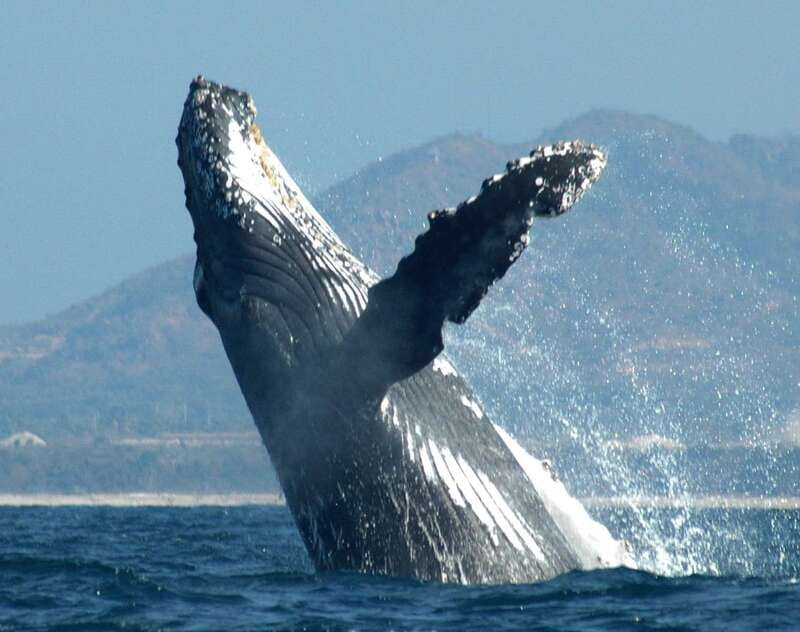
One of the most distinctive parts of this tour is the chance to listen through the boat’s hydrophone. When you can hear whale songs, the experience becomes more than visuals and narration. You’re tracking communication as it happens, which adds a layer that’s hard to replicate on a standard whale-watching cruise.
This is also where the guide’s explanations tend to click. Once the hydrophone is in use, the earlier briefing helps you connect sounds to the behaviors you’re seeing outside the waterline.
The practical takeaway: if you want a tour that combines science and sensory experience, this audio element is a strong reason to choose this operator. It turns the bay into a classroom where the whales are the lesson.
Participating in a research project: what you’re actually doing on the water
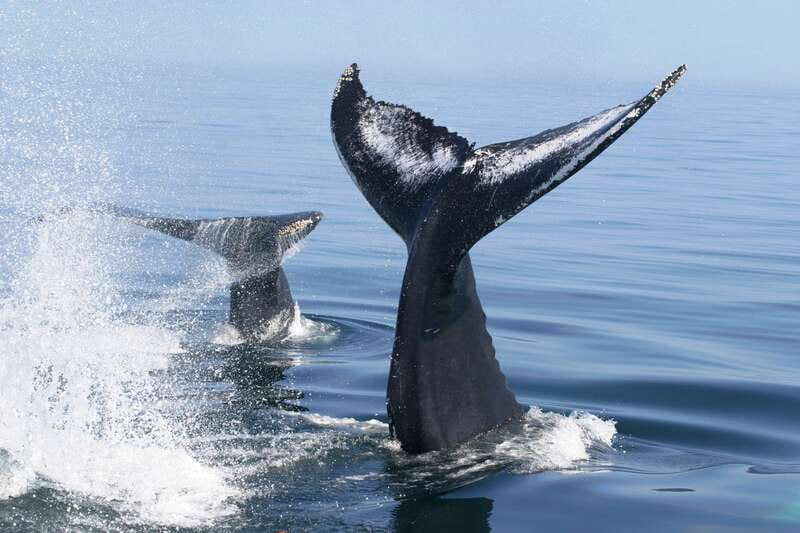
This isn’t sold as a casual whale ride. You participate in an ongoing research project while observing whales’ behavior in the bay. The idea is simple: your careful observations help the office gather information for their research work.
On the water, that usually means slowing down enough to watch behavior instead of only chasing excitement. You spend time observing and collecting information during the 3-hour bay window. It’s an action step that makes the outing feel grounded in real conservation work rather than only tourism.
For many people, this is the moment the tour becomes memorable in a deeper way. Seeing a breach is thrilling, but understanding how and when whales interact is what tends to stick. Past outings have included following a mother and calf relationship closely, then shifting to a different group later in the trip—so you’re not only seeing whales, you’re learning how guide teams interpret whale activity.
What sightings can look like: moms, calves, and occasional big moments
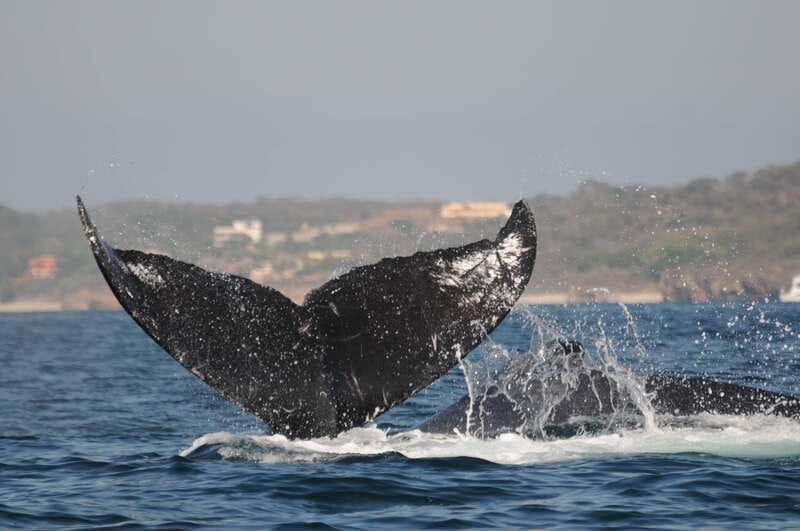
Whales in the wild can be unpredictable. That said, this tour is designed for observation, so your odds improve because the team can spend time with whales once they’re found.
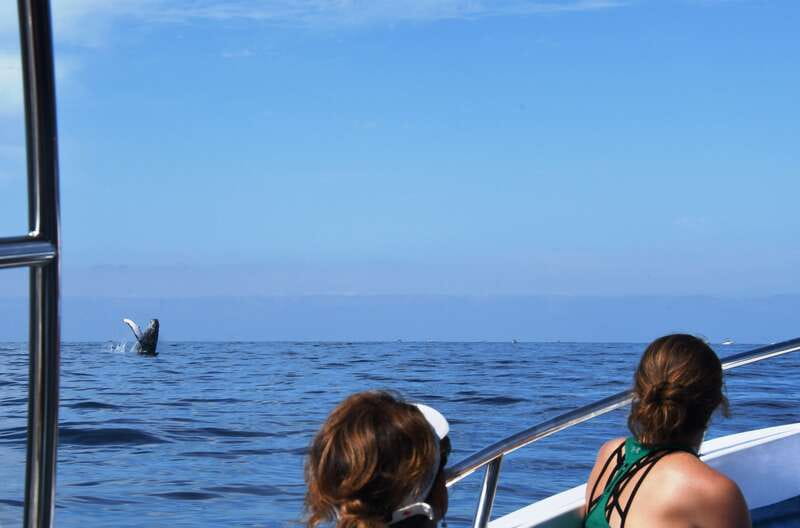
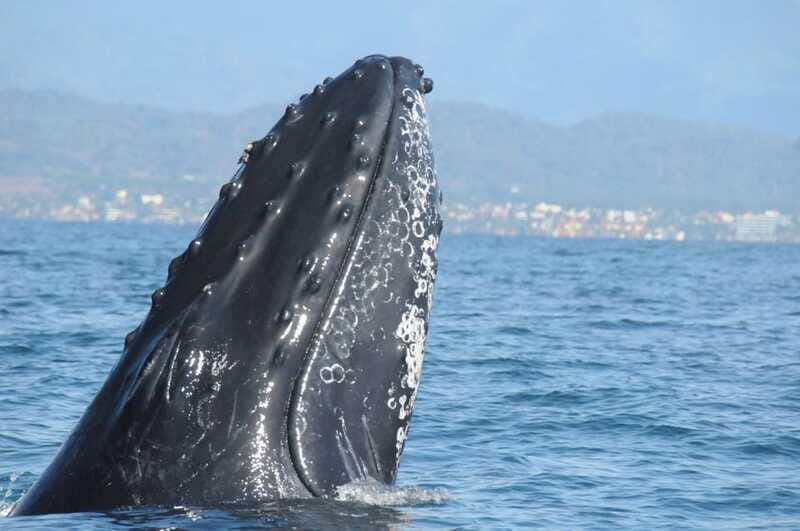
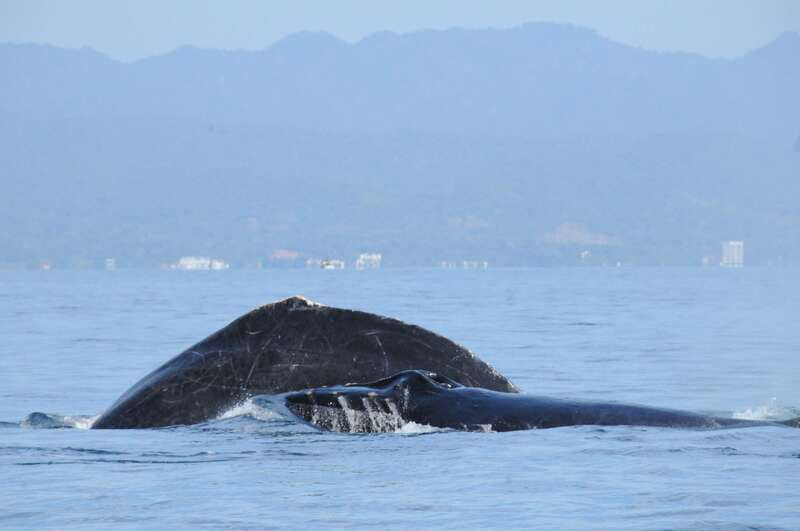
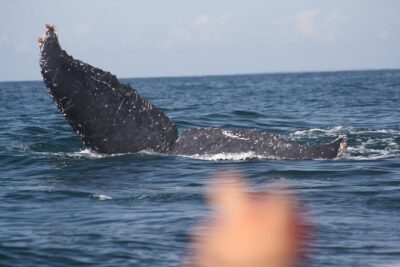
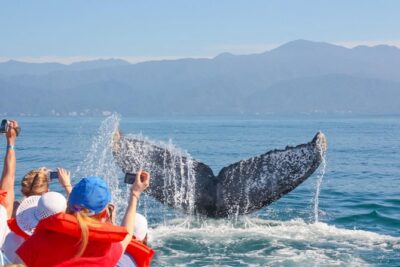
In prior departures, people have reported spending extended time tracking mother and calf pairs, and also following groups of several whales. Some trips have ended with a breach moment that felt like something you’d see on screen, which is exactly the kind of payoff you hope for after patient viewing.
Don’t ignore the extras, either. Dolphins, manta rays, and turtles have shown up during past outings, which is a nice reminder that Bahía de Banderas is more than humpbacks. If you’re flexible and let the guide lead, the day can still feel full even if the whale action is spread out.
- Puerto Vallarta Best Zipline Canopy + Tequila and Speed Boat Ride★ 5.0 · 3,786 reviews
- Winner 2025 Downtown Vallarta Food Tour with Vallarta Food Tours★ 5.0 · 3,738 reviews
- Extreme Adventure, Wildest Bridge, ATV & Ziplines★ 5.0 · 3,179 reviews
- Mega Yacht ALL INCLUSIVE Yelapa Waterfall & Snorkeling Adventure★ 5.0 · 2,515 reviews
- Food & Mixology Tour:Tequila,Tacos, Mezcal and Agave Cocktails★ 5.0 · 1,884 reviews
Price and value: is $134 a good deal for 3.5 hours?
At $134 per person for 3.5 hours, the sticker price looks like a mid-range whale tour. What makes it feel like a better value is what you actually get for that money.
Your ticket includes:
- A donation to the humpback whale research project
- Time on a small authorized boat (3.5 hours total)
- Coffee or tea, plus water refills
- A light snack (sodas and granola bars)
- An expedition leader
- Travel insurance
The only clearly stated extra cost is the boarding fee of mx$ 80 pesos, which you pay separately. Hotel pickup and drop-off aren’t included either, so you’ll want to plan your own arrival.
If you add up the included pieces—research contribution, guided interpretation, hydrophone-based listening time, and the boat duration—this price can make sense, especially for people who want more than a quick “spot-and-go” cruise.
Who this Puerto Vallarta humpback tour is best for
This tour fits best when you enjoy learning and want a guided, behavior-focused experience. It also suits people who are comfortable spending time outdoors and waiting patiently for whales to do their thing.
It is not suitable for children under 3 years, pregnant women, people with back problems, people with mobility impairments, wheelchair users, people prone to seasickness, people with recent surgeries, and babies under 1 year. If any of those apply, skip this one and look for a different format that better matches your needs.
It can work well for families with older kids. One set of parents with two teens reported enjoying the educational session and the whale sightings. If your kids can sit through a guided lecture and stay calm on the water, the learning component is often a hit.
Getting ready: face covering, pets, and seasickness reality
Before you go, bring a face mask or protective covering, since that’s explicitly required. Pets aren’t allowed, so leave them at home.
If you’re prone to seasickness, take that seriously. The tour’s “not suitable” label is the big clue. You don’t want to spend the best part of the day uncomfortable, because the whole format depends on observation time.
Should you book this humpback whale research adventure?
Book it if you want humpback whale watching with an educational backbone. The pre-boat briefing, hydrophone listening, and research participation make it feel more like a mission than a sightseeing loop. It’s also a great choice if you appreciate learning about whale behavior and communication, not just collecting photos.
Skip it if you need something flexible for health, mobility, or motion sensitivity. The experience is designed for the water, and it comes with clear restrictions. If you fall into one of the “not suitable” categories, you’ll likely be happier with a different Puerto Vallarta nature option.
If you’re deciding between a casual whale cruise and a research-focused outing, this one’s built for the people who want both wonder and understanding in the same 3.5-hour window.
FAQ
How long is the Puerto Vallarta humpback whale research tour?
The tour lasts about 3.5 hours total.
Where do I meet for the tour?
You’ll find the EcoTours Vallarta office at the end of Proa street, next to the ramp, in the office with a terraza.
What languages is the tour offered in?
The live tour guide speaks English and Spanish.
What is included in the $134 price?
Included items are a donation to the humpback whale research project, time on a small authorized boat (3.5 hours), coffee or tea, refilled water, a light snack, an expedition leader, and travel insurance.
Is there an extra boarding fee?
Yes. A boarding fee of mx$ 80 pesos is not included.
What should I bring, and are there any restrictions?
Bring a face mask or protective covering. Pets are not allowed, and the tour is not suitable for children under 3 years, pregnant women, people with back problems, people with mobility impairments, wheelchair users, people prone to seasickness, people with recent surgeries, and babies under 1 year.
More From the Vallarta Review Desk
Whale Season on the Bay
New on the Malecon: Reviews Just Added
- Puerto Vallarta: Mayahuel Show & Tequila Tasting.
★ 4.7 · 4 reviews - Puerto Vallarta’s Historic Mexican Village Tour: El Tuito
★ 4.5 · 5 reviews - From Puerto Vallarta: Jungle Mountain Bike Tour
★ 4.2 · 5 reviews - Jet Ski Jet Ski Rental in Puerto Vallarta
★ 4.0 · 5 reviews - Puerto Vallarta RZR Tour to the Sierra
★ 4.0 · 5 reviews - Jungle HorseBack Adventure to Las Palmas Waterfall All Included
★ 3.5 · 5 reviews
Banderas Bay Whale & Dolphin Watching, compared.
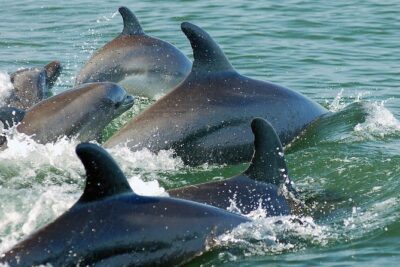 ★ 4.5Watch and Swim with Dolphins in the WildFrom $105668 reviews
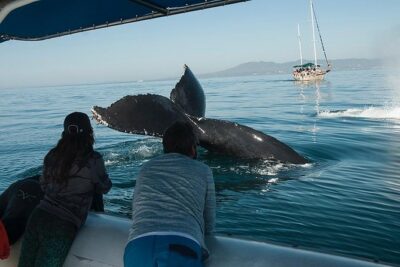 ★ 5.0Whale and Dolphin Watching with a Biologist in Puerto VallartaFrom $105666 reviews
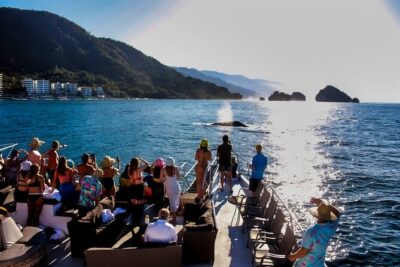 ★ 5.0Sunsets and Whales Mega Yachts ALL INCLUSIVE: Puerto VallartaFrom $80509 reviews
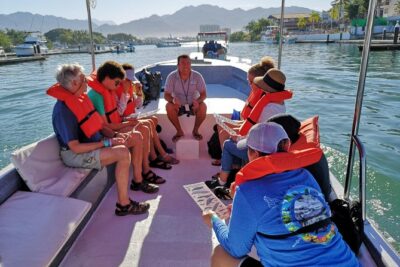 ★ 5.0Whale Encounter Puerto VallartaFrom $99469 reviews
 ★ 5.0Whale Watching Cruise In Puerto Vallarta & Nuevo VallartaFrom $99398 reviews
 ★ 5.0Small-Group Half-Day Whale-Watching Tour in Puerto VallartaFrom $110334 reviews
 ★ 4.0Whale & Dolphin Watching Cruise in Puerto Vallarta All InclusiveFrom $78212 reviews
 ★ 4.5Whale Watching ExperienceFrom $89186 reviews
Browse the lists this tour appears in